"I was a bone in the throat of the doctors who fought for Adele. Today I walk among them"
13 years after the stone-throwing attack in which her toddler daughter was critically injured, Dr. Adva Biton has returned to Schneider Medical Center as a quality assurance manager. She also runs the "Adele" charity project and dreams of launching a mobile therapeutic center for bereaved families: "If from our story we can manage to bring a little comfort to other families, that will be her victory."
Almost half a year has passed since Dr. Adva Biton started her job as a quality assurance manager at the Schneider Children's Medical Center. Only upstairs, to the wards, she is still unable to go.
"Until now, I avoid going up to the floors where the patients are," she admits. "From my first day at work, I told myself 'wait, a little more', and in the end, the Holy One, Blessed be He, planned a shaking meeting for me precisely in the elevator." The elevator doors opened and facing her stood Prof. Elhanan Nahum, director of the intensive care unit. "He looked at me and asked, 'What, you work here? No way. Why are you doing this to yourself?'"
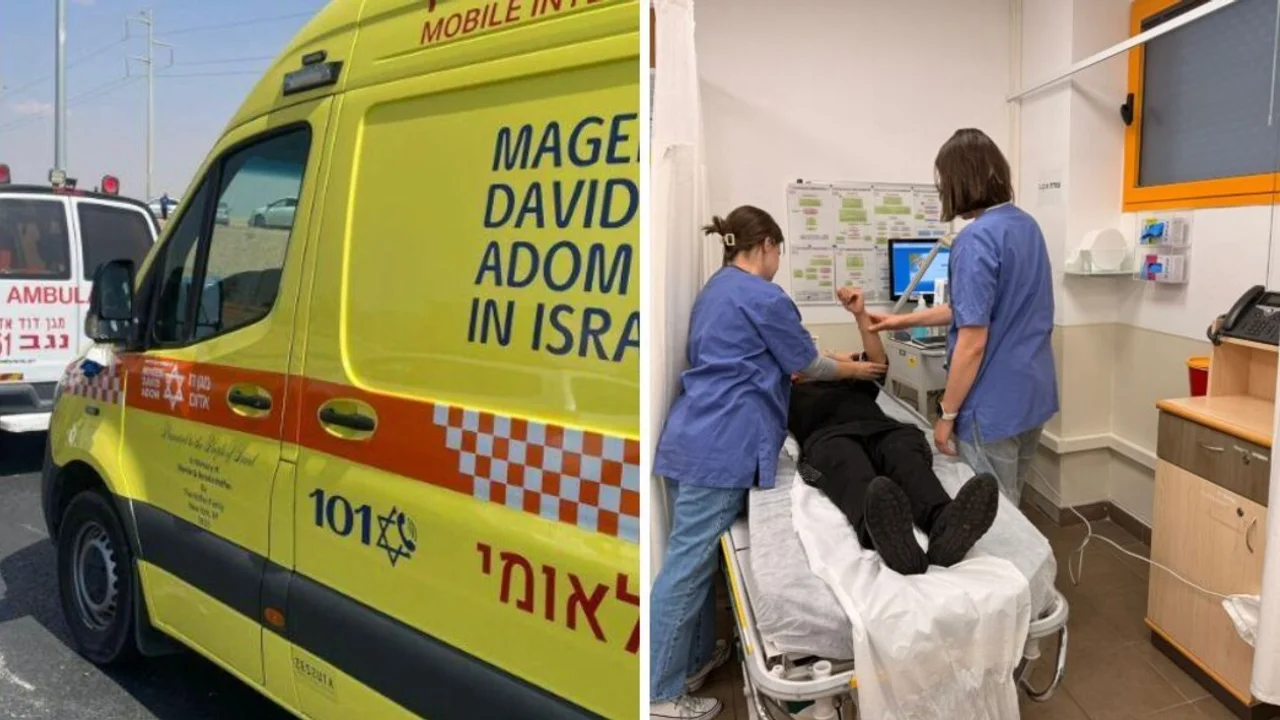
To understand Prof. Nahum's reaction, one must go back 13 years. On March 14, 2013, Biton was driving with three of her daughters on Highway 5 when Palestinians threw stones at the vehicle. Adele, two and a half years old, suffered a critical head injury. Almost two years lasted the struggle for the toddler's life: long months in intensive care at Schneider, rehabilitation at the Loewenstein Hospital, and finally nursing care at home. In February 2015, Adele passed away from complications of pneumonia.
"When Adele was hospitalized at Schneider, I was immersed in the whirlpool of medical care for her and did not always see all the professional staff who wanted to help her. Now, when I am on the other side of the barricade, I want to return to the hospital all the good they gave me," says Biton.
Biton, a doctor of medicinal chemistry, was at that time before a post-doctorate, but the attack stopped everything. Over the years, she moved into the fields of pathology and quality in the healthcare system. She clarifies: "I am not coming here to do therapy for myself. I want to return the good they gave me."
Adele was a very opinionated girl. "This combativeness allowed her to hold on for two years after the critical injury," her mother recalls. "The medical staff did not see her as rehabilitatable; we had difficult conversations with the doctors — the same ones among whom I walk today."
Biton admits she was a "challenging mother": "If you ask doctors here, I believe they will say I was a 'bone in the throat' — I had something to say about everything."
Today, the central mission of the Biton family is the "Adele" association ("I care for the other"). The project helps bereaved families by providing emotional accompaniment. Funds are raised through a coffee cart in the settlement of Yakir. "Bereavement is not a photogenic topic," says Adva. "The cart gives us independence."
Every shekel earned is intended for one goal: "Adele's House," a truck converted into a mobile therapeutic center. "It is a small house with a living room and a recording studio. Music opens a door to what is very difficult to say in words," she explains.
Despite the pain, Adva Biton continues to live a full life. "I am almost a grandmother, and I have a three-year-old child. I am living life for real, not pretend."