Israeli TV Networks Face High Costs and Tech Challenges on Election Night
Israeli television networks invest millions in complex election night broadcasts, balancing advanced augmented reality technologies and entertainment features against declining traditional viewership.
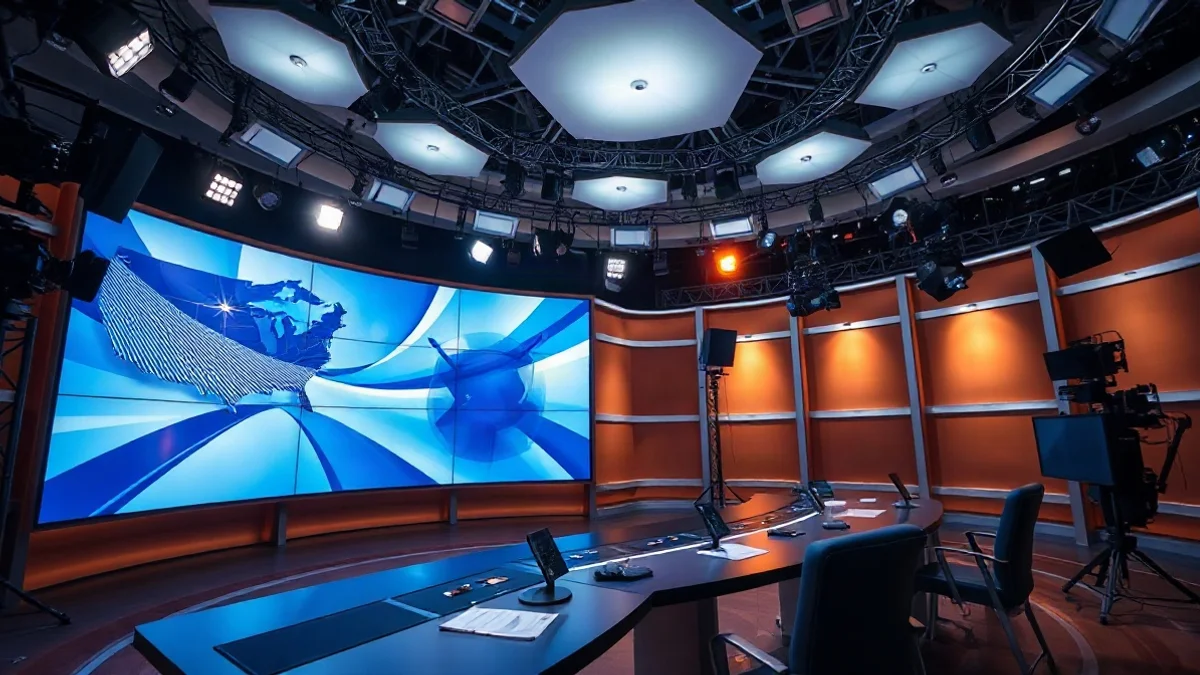
Election day in Israel presents television networks with a complex financial and logistical challenge. On one hand, massive budgets spent on frequent electoral cycles demand strict cost-cutting and maximum efficiency; on the other hand, a shifting political landscape and fierce competition from social media force broadcasters to constantly innovate. Industry estimates suggest that the total cost of election night across all major networks reaches tens of millions of shekels, encompassing news broadcasts and companion programs. While past productions have exceeded 8 million shekels, current economic realities have prompted networks to scale back, with news broadcasts alone averaging between 4 and 5 million shekels.
Four Key Cost Drivers
These expenses are driven by four primary components. First, the exit poll is one of the heaviest financial burdens, costing 1 million shekels or more to deploy physical polling stations and specialized pollsters. Networks that opt out of physical polling stations in favor of telephone surveys save significant funds but present a more modest broadcast. Second, remote broadcasting and field headquarters deployment scale according to the number of parties covered. Simple desk setups cost hundreds of thousands of shekels, while complex outdoor studios at party headquarters with stages, lighting, and expanded panels can reach 1 million shekels.
Third, technology and graphic packaging designed to visualize mandate distributions and coalition scenarios using augmented reality cost hundreds of thousands of shekels. Fourth, workforce investments, including freelancers and overtime, inflate budgets significantly. Election day is an official day off, entitling workers to double pay, while marathon broadcasts spanning up to 48 hours require hundreds of simultaneous staff members across multiple continuous shifts.
Technology, Drama, and Viewer Trends
Election day transforms television into a synchronized mega-operation running from early morning until the early hours of the following night. Regular programming is replaced by open studios and continuous live updates. Broadcasters deploy dozens of reporting positions nationwide, focusing heavily on party headquarters and voting centers. Augmented reality screens display real-time data and coalition negotiation simulations, culminating in the 10:00 PM exit poll reveal.
Despite the high technological drama, audience interest has fluctuated. Viewership data from the 2022 general elections showed a notable decline, with total viewership across the three major channels dropping from 50.5% in March 2021 to approximately 40% in November 2022. Networks now face the crucial test of whether viewers will return to screens or if digital platforms will continue to erode traditional broadcast viewership.
Network Strategies: With or Without Humor
To capture viewers, each network adopts a distinct approach. Keshet and Channel 12 leverage their market leadership by combining hard news with flagship entertainment, integrating live satirical coverage from Eretz Nehederet. Reshet and Channel 13 emphasize technological innovation under new ownership, deploying AI-driven data systems, fresh graphic packaging, and entertainment tie-ins such as Cash Taxi.
Meanwhile, the Israeli Public Broadcasting Corporation focuses on cross-platform synergy and infrastructure efficiency, utilizing a pre-designed multi-screen studio and broadcasting across television, radio, and digital channels alongside popular comedy brands. Channel 14 positions itself as a major political hub, broadcasting The Patriots from Jerusalem. i24NEWS focuses on strict hard news without satire, offering international multi-language broadcasts, while newer market entrants deploy expanded polling infrastructure to challenge established ratings leaders.