Israeli Malls Pivot to Retailtainment and Sports to Counter E-Commerce Surge
Shopping malls across Israel are transforming into entertainment hubs by integrating sports complexes, extreme parks, and dining to counter the rise of e-commerce and attract visitors.
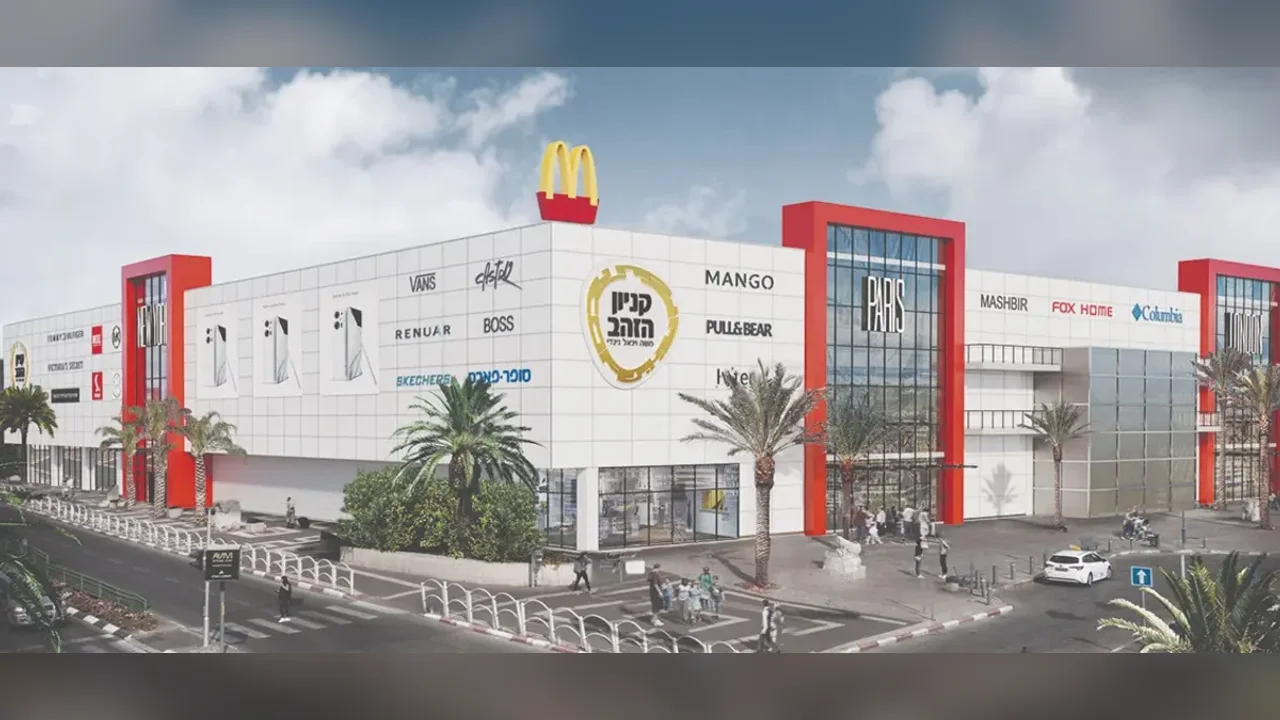
The traditional shopping mall model, once built entirely around massive retail spaces and fashion chains, is undergoing a profound transformation. The rise of e-commerce giants such as Shein, Next, AliExpress, and Amazon has fundamentally altered consumer habits, prompting mall owners to rethink their core strategy. When clothing can be ordered to the doorstep within minutes, the foundational question changes from maximizing retail revenue per square meter to figuring out what motivates a consumer to visit a physical shopping center in the first place.
The Online Effect and the Fight for Time
Consumer behavior experts note that modern malls no longer compete merely with neighboring retail centers. They now contend with digital platforms, streaming services, and food delivery apps available directly on a smartphone screen. Getting people to leave their homes requires offering experiences that screens cannot replicate.
Despite the rapid growth of online shopping, leading commercial centers in Israel maintain high occupancy rates and substantial foot traffic. The shift is not about the death of the shopping mall, but rather the evolution of its role. The new scarce resource is time, giving rise to the global retailtainment trend that combines retail with dining, sports, and entertainment.
Transforming Spaces for Entertainment and Sports
Mall operators across Israel are actively repurposing underutilized areas, such as rooftops and former anchor spaces, to extend visitor stays. At the Rananim Mall in Raanana, a 6,000-square-meter rooftop complex featuring 12 padel courts is currently under construction, alongside the return of a more intimate cinema format. Similarly, at the Seven Stars Mall in Herzliya, a former cinema hall was converted into a 2,000-square-meter indoor extreme sports park known as Gravity Park.
Industry executives emphasize that transforming a functional 20-minute errand into a two- or three-hour leisure experience completely changes the economics of the location. Visitors eat, drink, explore unplanned stores, and most importantly, gain a compelling reason to return. Diversifying attractions also helps spread business risks, as padel courts, restaurants, and fashion outlets draw different crowds at different times of the day.
A Reversed Paradigm: Leisure First, Shopping Second
Mall management points to a significant inversion in consumer behavior. While shopping used to be the primary reason for visiting, leisure and dining now act as the main anchors driving traffic to the retail stores. Visitors arrive primarily to spend time with family or friends, and shopping becomes a secondary activity.
At the same time, experts warn against uniformity. If every commercial center replicates the exact same sports facility or restaurant lineup, competitive differentiation will vanish. Success will ultimately belong to operators who deeply understand their local audience and tailor precise, unique experiences rather than blindly copying current trends.