Israel's Housing Crisis Persists as Experts Fault State Supply Policies
Housing market experts and officials warn that Israel's construction crisis persists due to policy failures, stalled urban renewal, and an overemphasis on demand-side tax measures.
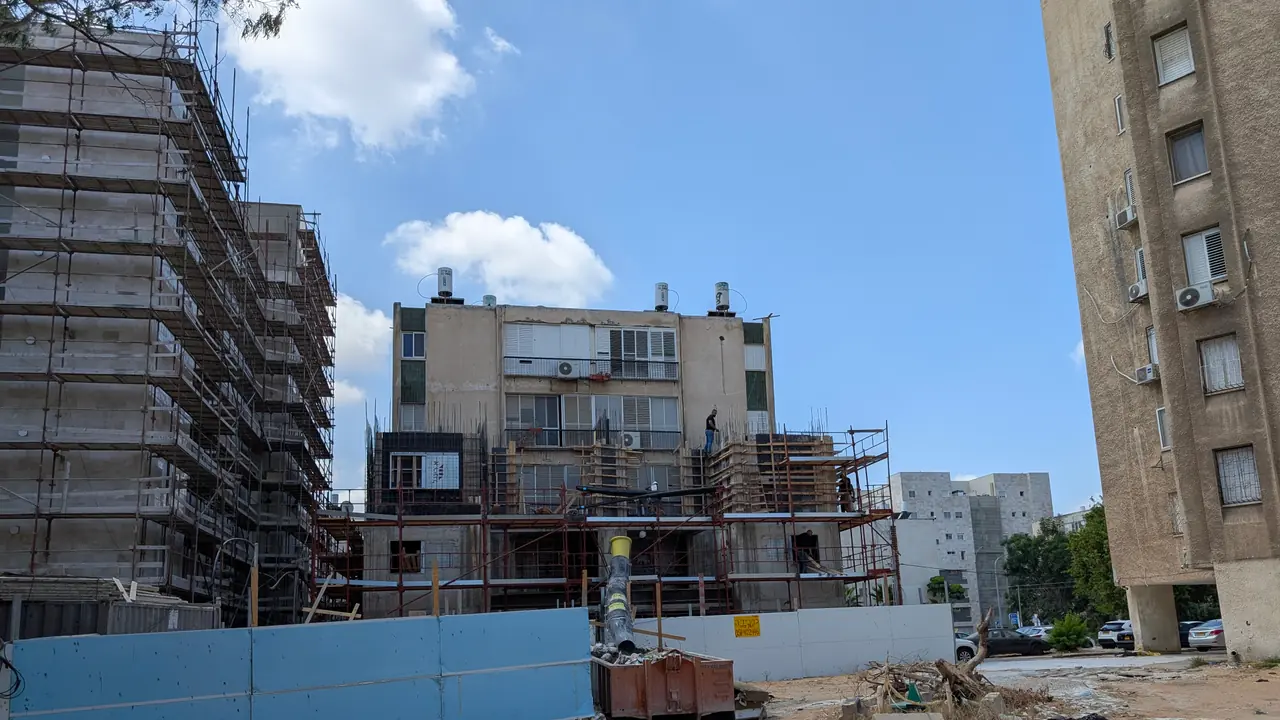
Israel's housing market is grappling with a severe structural imbalance between supply and demand, as critics argue government policies have repeatedly failed to accelerate residential construction. Nechama Bogin, chair of the Land Appraisers Association, launched a scathing critique against government housing policies, identifying state-backed subsidized housing programs as a primary driver of rising home prices.
According to Bogin, state programs have flooded the market with land without sound economic criteria, failing to match the massive public expenditure with proportionate solutions for home buyers. Bogin noted that the state's heavy reliance on tax hikes to suppress demand ignores the core issue of stagnant construction rates, pointing out that Israel consistently fails to meet its strategic housing target of 65,000 completed units annually. She also called for reviving long-term rental housing, which she argued was severely hampered by soaring interest rates.
Rafy Elmaliach, director-general of the Planning Administration, advocated for centralizing all housing authorities under a single cabinet-level body, similar to the former housing cabinet model. Speaking at the Tel Aviv Builders Association conference, Elmaliach stated that unifying planning, infrastructure development, and land marketing would resolve systemic bottlenecks. He highlighted that approximately 1.3 million housing units are currently approved under urban renewal schemes, awaiting infrastructure solutions before they can be released to the market.
Weighing in on urban renewal bottlenecks, Adv. Beni Arbiv, chairman of the National Planning and Building Council, addressed the contentious issue of betterment levies. Arbiv stressed that the current regulatory uncertainty surrounding betterment levies requires immediate legislative reform by the incoming government, suggesting a fixed percentage of developers' sales revenues as a viable alternative to existing levies.
Tomer Tzalich, vice president and head of entrepreneurship at the Builders Association, warned that approximately 80% of urban renewal projects have lost their economic viability due to narrowing profit margins. Tzalich noted that projects initially approved with thin profit margins under Standard 21 have plummeted to single-digit returns, leaving 300,000 approved housing units stalled. He called for comprehensive reforms, including reduced public exactions and increased building rights, to jump-start urban renewal across the country.