Why Finding a Professional Golf Course in Israel Is Nearly Impossible
Prime Minister Benjamin Netanyahu's joke about playing golf with US President Donald Trump highlights a surprising reality: despite startup culture, Israel has only one professional golf course.
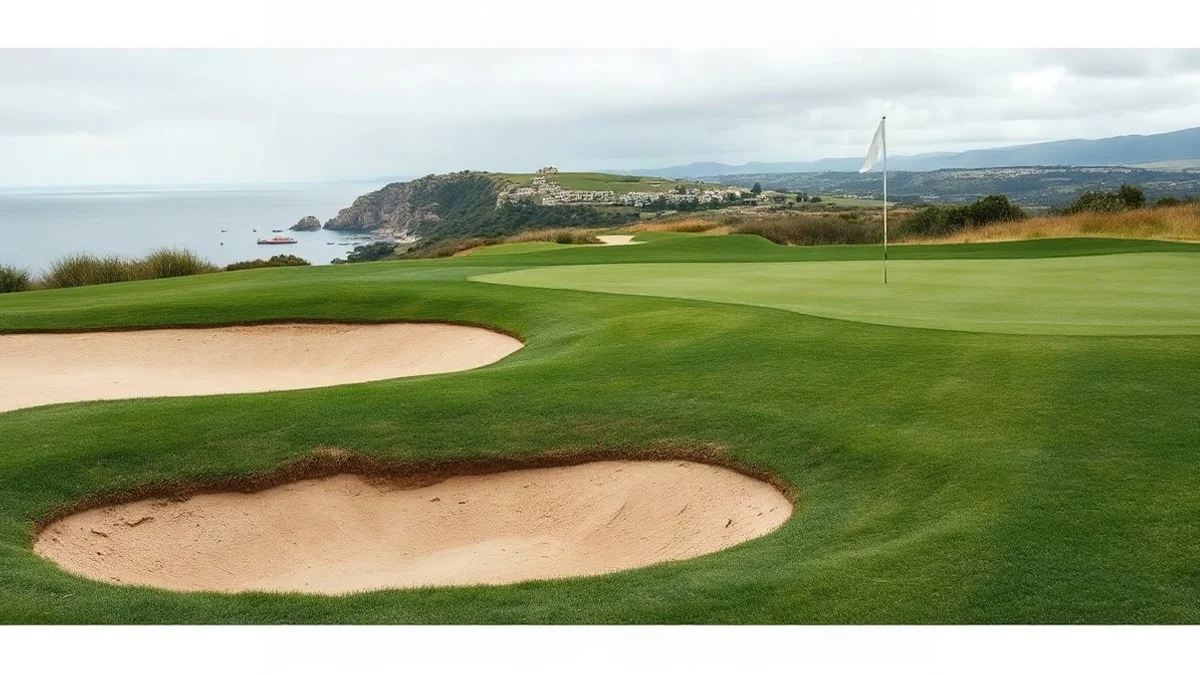
When Ayala Hasson asked Prime Minister Benjamin Netanyahu about his conversations with US President Donald Trump, he laughed and replied: "About golf... what else would I talk to him about?". Trump is known as an avid golf enthusiast and owns golf clubs around the world through his business ventures. Yet Netanyahu's joke raises a curious question: why is it nearly impossible to find a professional golf course in a country that prides itself on successful entrepreneurs and business innovators?
Until seven years ago, two main golf courses operated in Israel: in Caesarea and kibbutz Ga'ash. The latter, opened in 1999 with nine holes, closed in late March 2019 following prolonged legal proceedings regarding the commercial use of agricultural land without proper permits. Despite attempts to regularize its status, the kibbutz decided to shut it down, leaving hundreds of players from the central region without a nearby alternative and making the Caesarea club the only one of its kind in Israel.
The Grand Plan That Never Was
Yet this reality is far removed from the vision presented by the authorities. In December 2009, the Ministry of Tourism and the Israel Land Administration unveiled an ambitious plan to establish 16 international golf courses within 15 years, backed by an estimated investment of some 760 million shekels. According to forecasts presented at the time, the project was projected to generate around 3 billion shekels for the economy, primarily through golf tourism. However, nearly 17 years have passed, and this ambitious blueprint has failed to materialize.
Anyone wishing to play golf in Israel can still do so at the Caesarea Golf Club, established on the initiative of the Rothschild family and inaugurated in 1961. The complex features a professional 18-hole course, practice facilities, and a clubhouse. And how much does this pleasure cost? According to the official price list, basic membership fees range from 14,400 to 32,550 shekels, depending on the tier. Non-member guests can play for 485 shekels on weekdays or 545 shekels on weekends.
Why New Courses Fail to Arise
So why are no additional courses being built? The answer starts with land. A professional course requires hundreds of dunams, alongside massive investments in construction, irrigation, and maintenance. In a country where land is expensive and the domestic demand for golf is limited, economic viability remains a hurdle. A striking example is Eilat, where efforts to build a golf course have dragged on for over 20 years. The plan encompasses a complex spanning some 850 dunams alongside a 560-room hotel, but previous tenders have failed and the project remains unbuilt.
"The low number of players illustrates a cycle that is difficult to break: without additional courses, it is hard to expand the sport, and without enough players, it is hard to justify new courses."
Meanwhile, according to 2026 European Golf Association data, only about 860 players are registered with the Israeli association. The Israel Golf Association continues to promote initiatives in Eilat, Omer, and other regions, but for now, anyone wanting to play a round of golf with Donald Trump in Israel will simply have to invite him to Caesarea.