Israel's Next Foreign Minister Faces Looming European Sanctions and Diplomatic Crisis
Israel's next foreign minister faces a severe diplomatic crisis in Europe, with the UK planning settlement trade bans and EU nations debating sanctions. The post will be highly contested by Gideon Sa'ar, Israel Katz, Yair Lapid, or Avigdor Lieberman depending on the upcoming election outcome.
Israel's international standing is poised to be one of the most critical challenges facing the next government. Following years of war, friction with Western governments, and sharp criticism of Israeli policies in the West Bank, relations with several European nations have hit historic lows. In some capitals, officials are no longer limiting themselves to verbal condemnations.
In recent months, European discussions have intensified regarding potential punitive measures against Israel, particularly in response to construction plans in the E1 area. Diplomatic sources indicate that a key debate centers on timing. Some European officials fear that imposing sanctions ahead of the Israeli elections could inadvertently boost Prime Minister Benjamin Netanyahu and right-wing parties, as it might be perceived as external interference in the democratic process.
The British Shift and Rising Public Friction
Unlike other European nations, the United Kingdom is moving toward concrete action. The government of Prime Minister Andy Burnham is expected to advance a ban on trade in goods—and in some cases, services—originating from West Bank settlements. London is also examining additional measures as part of what it describes as a broad policy shift toward Israel. Relations between Jerusalem and London are currently described as the worst they have been in decades.
This diplomatic strain is increasingly felt by ordinary citizens. In recent months, there has been a surge in reports of Israelis being denied service or accommodation in Europe due to their nationality. In Germany, authorities launched an investigation after an Israeli family attempting to book a hotel room in Bavaria received a message stating that Jews were not welcome at the establishment.
Against this backdrop, the identity of Israel's next foreign minister carries immense weight. The incoming minister will not only have to manage ties with Washington and regional allies but also halt European sanctions, rebuild fractured alliances, and reshape international public opinion.
Scenario A: A Right-Wing Government
If Benjamin Netanyahu succeeds in forming another coalition, the natural candidate to continue as foreign minister is the incumbent, Gideon Sa'ar. Sa'ar is keen to remain in office and pursue his current diplomatic strategy, which focuses on expanding Israel's circle of allies, particularly in Latin America.
Sa'ar designated 2026 as the "Year of Latin America" for the Ministry of Foreign Affairs, capitalizing on political shifts across the continent. Under his tenure:
-
Diplomatic relations with Bolivia were restored after years of severance.
-
Colombia's new leadership fully restored ties and decided to move its embassy to Jerusalem, bringing the total number of nations with embassies in Jerusalem to nine.
-
Israel and the United States established a joint strategic dialogue framework focused on Latin America.
-
Israel initiated a diplomatic rapprochement with Venezuela, agreeing in August to restore consular services 17 years after ties were severed.
However, the foreign affairs portfolio could become a battleground within Likud. Defense Minister Israel Katz, who has twice served as foreign minister, remains a key contender. While Katz prefers to stay at the Ministry of Defense, he may demand the foreign affairs post if coalition negotiations force a cabinet reshuffle. Netanyahu would then have to choose between keeping Sa'ar or rewarding a senior Likud figure.
Scenario B: A Center-Left Government
If a coalition is formed by parties opposing Netanyahu, Yair Lapid is the leading candidate for the post. Lapid, who served as foreign minister from 2021 to 2022, brings direct experience and established relationships with European and U.S. administrations. Within the "Be-yahad" joint list, he is a natural choice for a senior portfolio if Naftali Bennett becomes prime minister.
Lapid’s primary objective would be rebuilding ties with Europe. While the current government relies on a handful of friendly member states to block adverse decisions within European Union institutions, a centrist government would likely seek to restore dialogue with Brussels, Paris, Berlin, and London to prevent anti-Israel measures from gaining majority support in the first place.
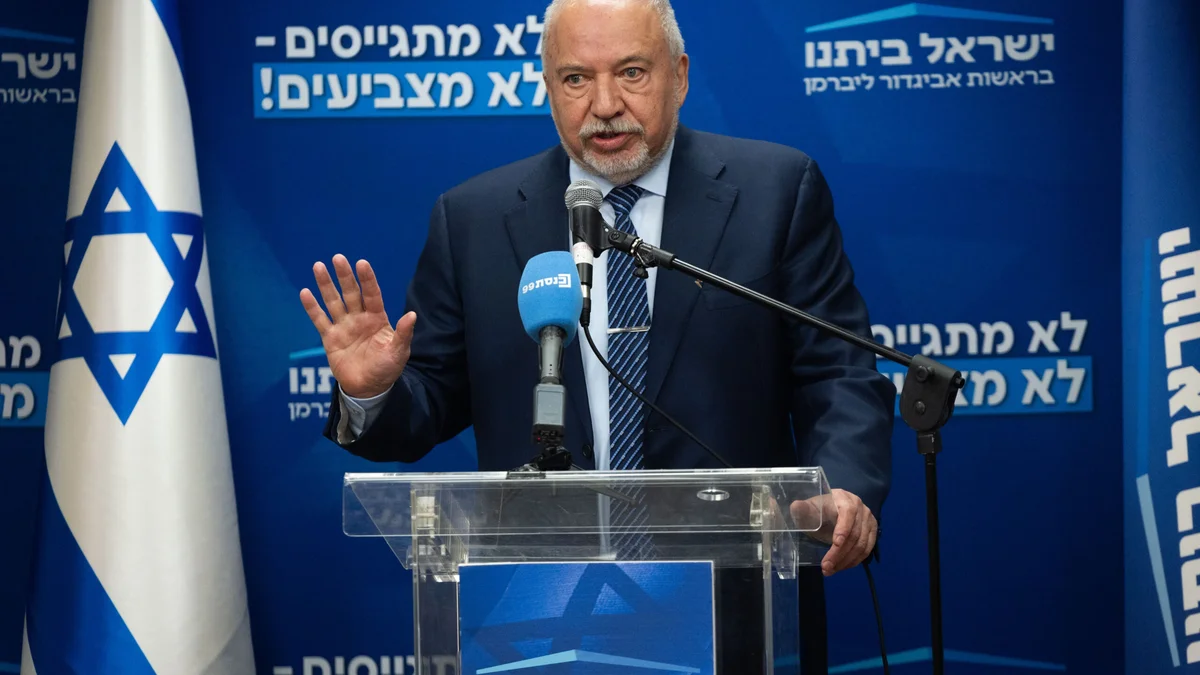
However, Lapid is not the sole option. Naftali Bennett could demand the foreign affairs portfolio if he does not secure the Ministry of Defense, or if a rotation agreement leaves him outside the Prime Minister's Office for part of the term. Additionally, Avigdor Lieberman, leader of Yisrael Beytenu, who served as foreign minister during 2009–2012 and 2013–2015, remains a powerful contender depending on his coalition demands.