European Capitals Deploy 70,000 Police Amid Violent Cost-of-Living Riots
European capitals deployed 70,000 security personnel and boarded up luxury stores as cost-of-living protests escalated into widespread riots and looting across France and Italy.
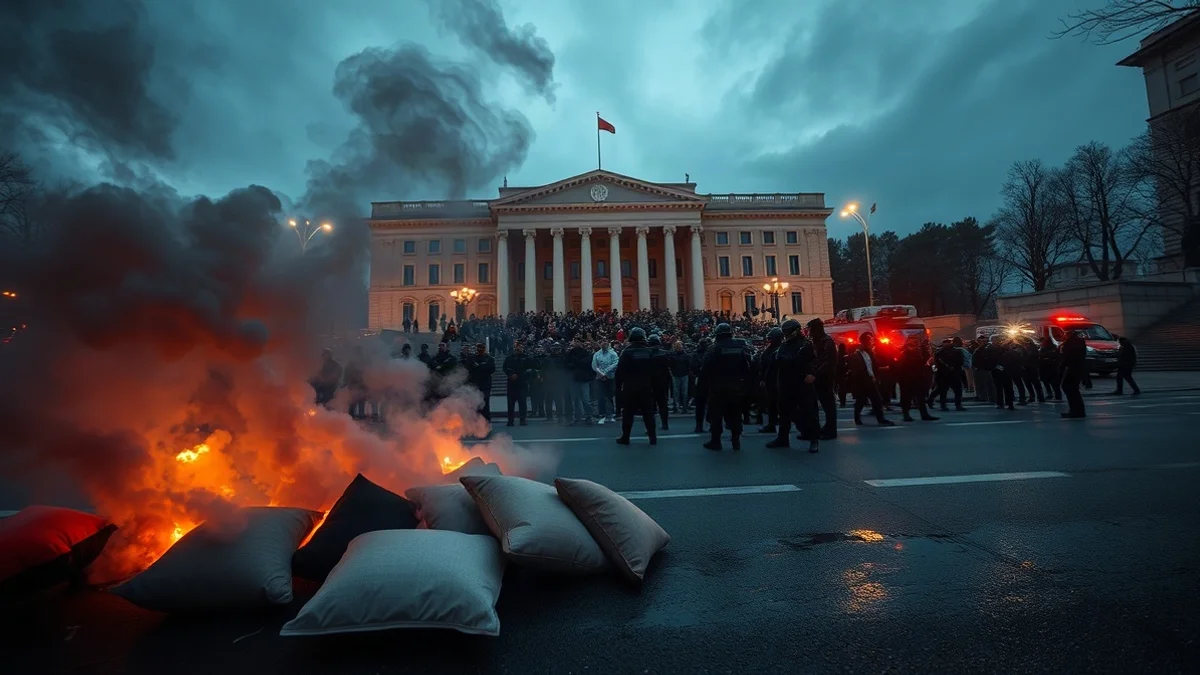
European cultural and fashion capitals resembled fortified war zones this weekend as 70,000 police officers and soldiers deployed across streets, national museums locked their doors, and luxury storefronts were boarded up over fears of widespread looting. What began as a social outcry over the rising cost of living and crumbling education systems has escalated into violent clashes between frustrated youth and security forces in France and Italy.
The current tensions follow a week of severe riots across France, where anti-government demonstrations sparked violent confrontations in major urban centers. According to reports, approximately 3,000 businesses in Paris, Marseille, Lyon, Nice, Nantes, and Limoges were looted or damaged, nearly 1,000 police officers were injured, and over 2,700 individuals were arrested.
The scale of the unrest prompted sharp criticism regarding the preparedness of authorities. French President Emmanuel Macron and Prime Minister Sébastien Lecornu faced intense scrutiny over intelligence failures and the inability of police forces to quickly contain the riots. Ahead of weekend demonstrations, the French government significantly reinforced security, deploying 70,000 officers and gendarmerie personnel nationwide, including a special reinforcement of 10,000 security troops.
In Paris, roughly 110,000 people marched under heavy police guard, joined by leftist leader Jean-Luc Mélenchon. Police in Lyon deployed tear gas to disperse protesters, while thousands gathered in Marseille chanting slogans against Macron, resulting in 135 arrests by midday. In the French capital, over 20 metro stations were shut down, and landmark cultural sites including the Louvre Museum, the Musée d'Orsay, and the Opéra Garnier closed their doors.
Luxury retail districts took extensive precautions as store owners boarded up storefronts along major shopping avenues. Police issued orders routing protesters away from commercial centers toward the suburbs, a move condemned by left-wing leaders as an attempt to fracture and suppress the demonstrations.
Spillover effects reached Italy, fueled by similar frustrations over the cost of living and housing crises, and amplified by viral social media copycat phenomena. Impoverished suburban youth in cities like Milan targeted opulent fashion districts in Milan and Rome. The hardline response from Prime Minister Giorgia Meloni's government, featuring harsher penalties and hundreds of deployed soldiers, further deepened societal polarization.
In Milan's fashion district, storefronts for brands such as Tiffany, Gucci, and Omega were covered with wooden panels to prevent looting. Following last week's involvement of some 2,000 youths in violent incidents, authorities deployed an additional 500 soldiers. In Rome, entire luxury streets were closed to traffic as protesters ignited flares and waved flags, highlighting the ongoing challenge authorities face in balancing the right to protest with public safety.