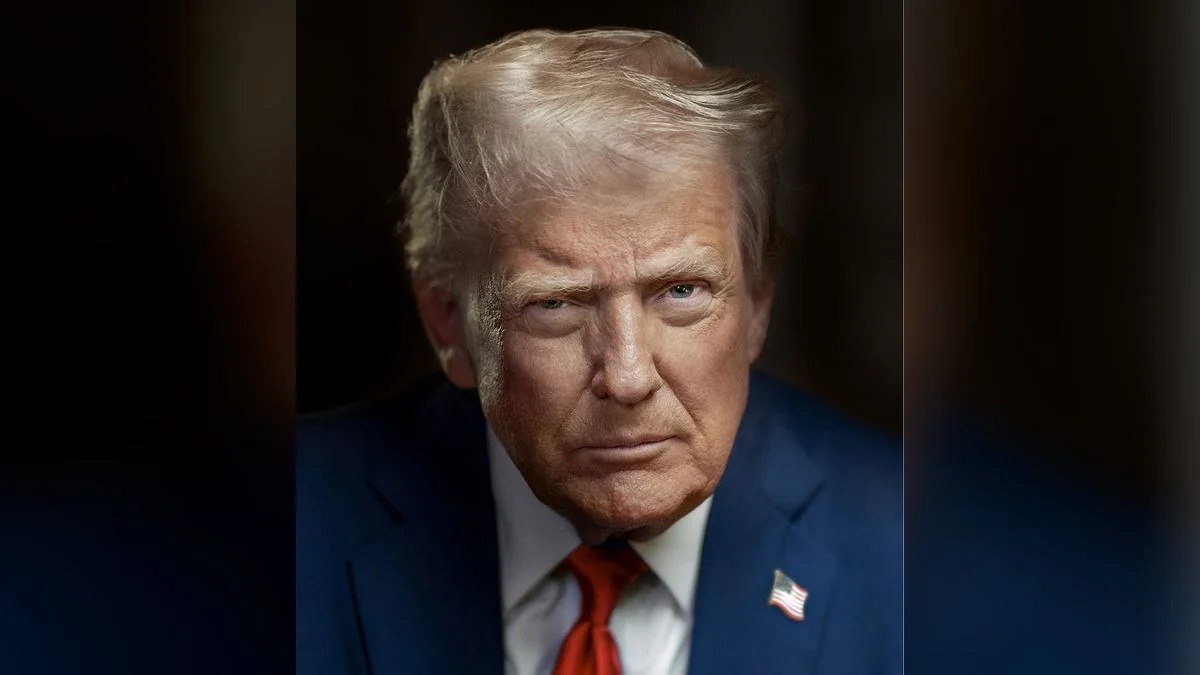
Erdogan imposed an embargo, but his sons continue to trade with Israel
World press headlines: Turkish President Recep Tayyip Erdogan has branded himself as a leading anti-Israel figure in the world, but revenues from Israel have flowed in large quantities into his sons' pockets. In the US, there is concern not only about the dwindling stock of interceptors, but also about the loss of drones worth billions of dollars, and the Houthis may push Washington to recognize the independence of Somaliland. Globes presents a short daily review of interesting news from the world media about Israel.
About the world press headlines
Against the backdrop of the constantly developing security situation, the lens of the world media reveals unique perspectives on what is happening in the country. From analyses by international experts and interpretations from a different angle to small stories from Israel that disappear from view, every day we present a short daily review of what is written in the world media about Israel to decipher how things look from overseas.
The articles presented in this section are taken from major newspapers around the world and do not necessarily reflect the worldview of Globes.
1. Turkish President imposed an embargo, but his family sells to Israel
Turkish President Recep Tayyip Erdogan imposed a trade embargo on Israel in May 2024, as revealed in Globes. However, the Arab newspaper Rai al-Youm reveals how much, even before that step and after it, the connection between Erdogan's statements and reality was quite coincidental. Thus, he continued to allow Azerbaijan to export oil to Israel through his territory, and the economic interests of his sons, Burak and Bilal, led them to conduct relations with Israeli businesses for many years, based on the shipping companies in which they were partners.
In Rai al-Youm, they point to an analysis carried out by the Reuters news agency, based on shipping data. Israel imports oil in large quantities from Azerbaijan via the Baku-Tbilisi-Ceyhan pipeline. From there, the oil is loaded onto tankers to Haifa. The Reuters check found that precisely in 2025, the year Erdogan imposed the embargo, Azerbaijani oil supplies to Israel reached a three-year high.
Beyond that, shipping experts found a continuous connection between the BMZ company, in which Bilal was at least a partner, and the owners of oil tankers that participated in the trade. Although there is no conclusive evidence of a direct link between Bilal and goods that left for Israel from the port of Iskenderun, the suspicion at the very least remains. In contrast, someone who is definitely involved in trade with Israel is his older brother, Burak, because he is a partner in the shipping company MB Denizcilik, which manages continuous business relations with Israel.
By Zuhair Andraus, Rai al-Youm.
2. Not just interceptors: USA lost drones in Iran worth billions
The preoccupation with American expenses as a result of Operation Roar of the Lion against Iran revolves, for the most part, around the issue of air defense. However, these are only one layer among many. A Washington Post exposé indicates that in recent months, the US has lost at least 45 MQ-9 Reaper drones, a quarter of all the vehicles it possesses. Considering the price, which ranges from 30 to 50 million dollars per unit, this is a loss totaling more than 1.3 billion dollars that the American taxpayer will be required to replenish.
A main center of activity for the drones was in the Strait of Hormuz, because of the Iranian blockade and the subsequent American siege imposed on the Islamic Republic. A senior American official told the Washington Post that not all the drones were intercepted kinetically (by missiles), and there were cases where a certain amount of drones crashed because of communication disruptions between the operators and the vehicles.
At the same time, a decrease is recorded in the volume of American interceptors. During the recent escalations against the Ayatollah regime, the US military was required to intercept more than 1,400 Iranian missiles and UAVs. According to the defense site TWZ and the CSIS research institute, the US began Operation Roar of the Lion with 2,300 Patriot interceptors, and the stock dwindled to 1,030 at the ceasefire, and even reached 759-827 on July 27. In the case of the THAAD system, the quantity dropped from 452 at the beginning of the operation to 232-262 at the ceasefire, and about 234-278 on July 27.
By Tara Copp and Noah Robertson, Washington Post; Howard Altman, TWZ.
3. The Houthis may cause the US to recognize Somaliland
Israel has taken many extraordinary actions since October 7, and one of the extraordinary political actions was the first recognition of Somaliland's independence. Now, experts tell Fox News that the influence of the Houthi rebels in Yemen on the entrance and exit gate to the Red Sea located north of Somaliland, Bab al-Mandab, may push the US to join in the recognition of Somaliland, in a step that will be much more significant than that of Israel.
Somaliland's roots are planted in the British colony that united in 1960 with Italian Somaliland to establish a united Somalia. After the collapse of the regime in Mogadishu in 1991, Somaliland declared secession, and since then has tried to win international recognition for its approximately 6 million residents. The US does not hold a permanent presence on its territory, but there is a significant base in the Red Sea in nearby Djibouti.
"China is significantly increasing its military and commercial presence in Djibouti," Edmund Fitton-Brown, the former British ambassador to Yemen and a senior fellow at FDD, told Fox News. "There is a feeling that Djibouti is not a reliable ally for the US." Major General Ken Ekman, who retired last year from leading the West Africa area in the US military secretariat, explained that the situation in the area may bring about an American political turning point, with recognition of Somaliland as an independent state: "The Houthis may change the US strategy in Africa."
By Paul Tilsley, Fox News.