Why Dogs Misinterpret Skunk Warnings as Playful Invitations
A German Shepherd's encounter with a skunk highlights a dramatic communication failure between species. While skunks use tail-raising as a severe warning, dogs misinterpret it as a playful social invitation.
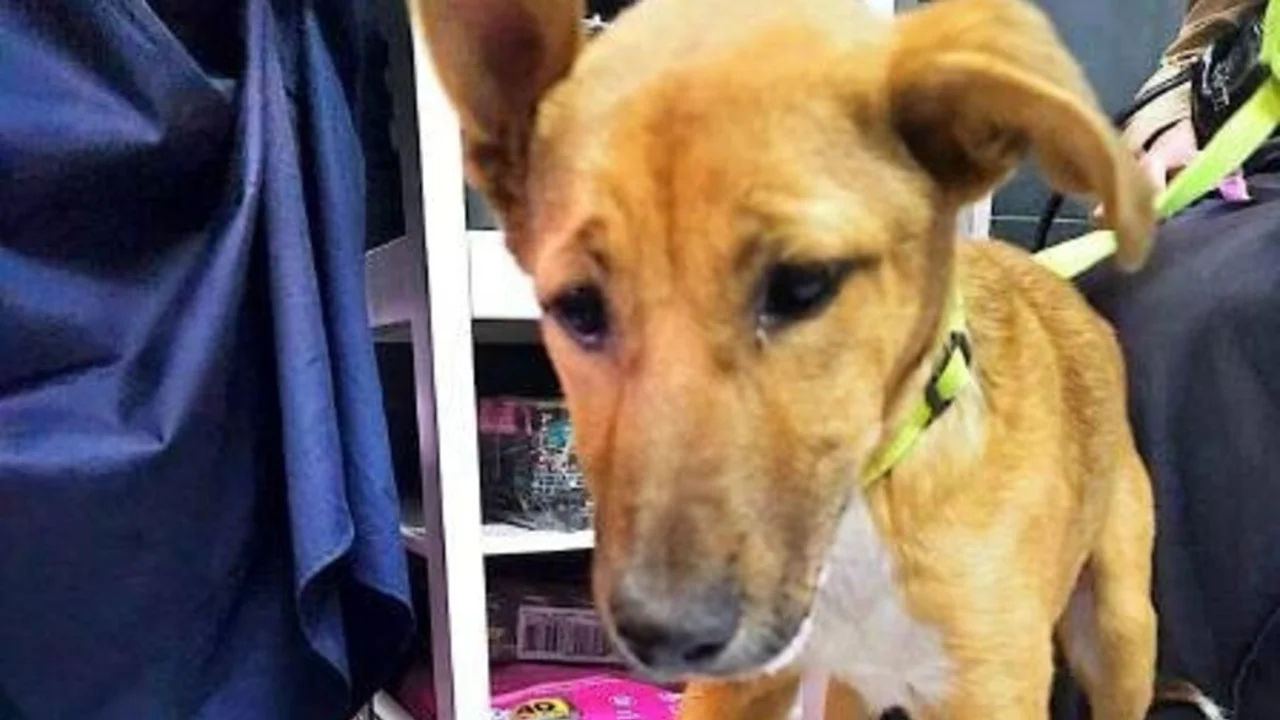
When Duncan Graham took Stella, his German Shepherd, out for a quick evening stroll in the backyard, he never imagined that within four seconds the entire house would be flooded with a suffocating chemical odor. Stella spotted a skunk in the corner of the yard and ran straight toward it with curiosity and joy. The result was immediate: a chemical spray directly into the dog's face, who panicked and ran back into the house, smearing the fragrant liquid across the sofas and carpets.
While many dog owners view this event as an aggressive and unprovoked attack by the skunk, animal behaviorists and ethologists explain that this is not malice, but rather a dramatic communication failure stemming from a completely contradictory interpretation of body language between the two species.
According to Dr. Jerry Dragoo, a biologist and director of the skunk research institute at the University of New Mexico, skunks are not aggressive animals by nature. The chemical liquid sprayed from the anal scent glands is composed primarily of organic sulfur compounds (thiols), and its production requires metabolically and energetically expensive resources from the animal's body. Furthermore, the scent glands contain a limited amount of fluid sufficient for only five to six sprays.
His findings show that once the glands are depleted, the skunk's body takes seven to ten days to replenish the supply. During this period, the skunk is left without its primary defense mechanism and is completely vulnerable to predators. Due to the heavy physiological cost, the skunk will use the spray only as an absolute last resort.
The Skunk's Graded Warning System
To avoid spraying, skunks have developed a graded visual and movement deterrence system. Prof. Theodore Stankowich, director of the Mammal Behavioral Ecology Laboratory at California State University, Long Beach, documented the escalation stages of the striped skunk in his research: initially, it rapidly stamps its front feet as an audible and visual warning; next, it continues by fluffing its fur and raising its tail high; the climax involves bending its body into a U-shape so that the head and scent glands face the threat simultaneously—a final resort before release.
Prof. Stankowich's laboratory data show that tail-raising occurs in about 69.1% of encounter cases with a threat. From the skunk's perspective, Stankowich explains, this sequence of actions serves as a prominent warning sign intended to visually increase its body volume, highlight warning colors (black and white), and make it clear to the attacker that they must withdraw immediately.
The Canine Interpretation: Social Gestures and Play Bows
Conversely, research in canine cognition shows that the dog brain interprets those exact same signals in the exact opposite way. According to Dr. Alexandra Horowitz, head of the Dog Cognition Laboratory at Barnard College, Columbia University, a dog's nose is its primary communication channel. Dr. Horowitz explains that sniffing the ano-genital area is a basic, non-aggressive social gesture in the canine world, designed to gather pheromonal information. When an animal raises its tail and exposes its rear, the dog interprets this as a readiness for social contact and olfactory investigation, rather than a threat.
Adding to this is another confusing movement element. Research by Prof. Marc Bekoff, professor emeritus of evolutionary biology at the University of Colorado Boulder, who first defined the "play bow" gesture in canids in scientific literature, shows that lowering the front body while raising the rear and tail is a structured ritualistic signal whose sole meaning is an invitation to play and chase.
The researchers' combined findings reveal the root of the fragrant tragedy: the skunk's front-foot stamping combined with raising its tail and rear resembles the canine "Play Bow" studied by Prof. Bekoff, while the raised tail is perceived, according to Dr. Horowitz's findings, as an invitation for olfactory inspection.
The result in the field is a total communication breakdown. The dog, interpreting the skunk's warnings as a festive invitation to play or a social encounter, runs forward curiously and aims its nose directly at the source of danger. The skunk, for its part, sees a predator continuing to wander toward it while completely ignoring all deterrence signals documented by Prof. Stankowich, realizes its life is in danger, and triggers its precious chemical weapon directly into the dog's face—just as happened to poor Stella.