Denmark Seeks National and EU-Wide Ban on Fast-Growing Turbo Chickens
The Danish government plans to ban fast-growing "turbo chickens" nationally and push for an EU-wide ban following an undercover TV investigation. Animal welfare groups and officials warn that the accelerated growth leads to severe skeletal deformities.
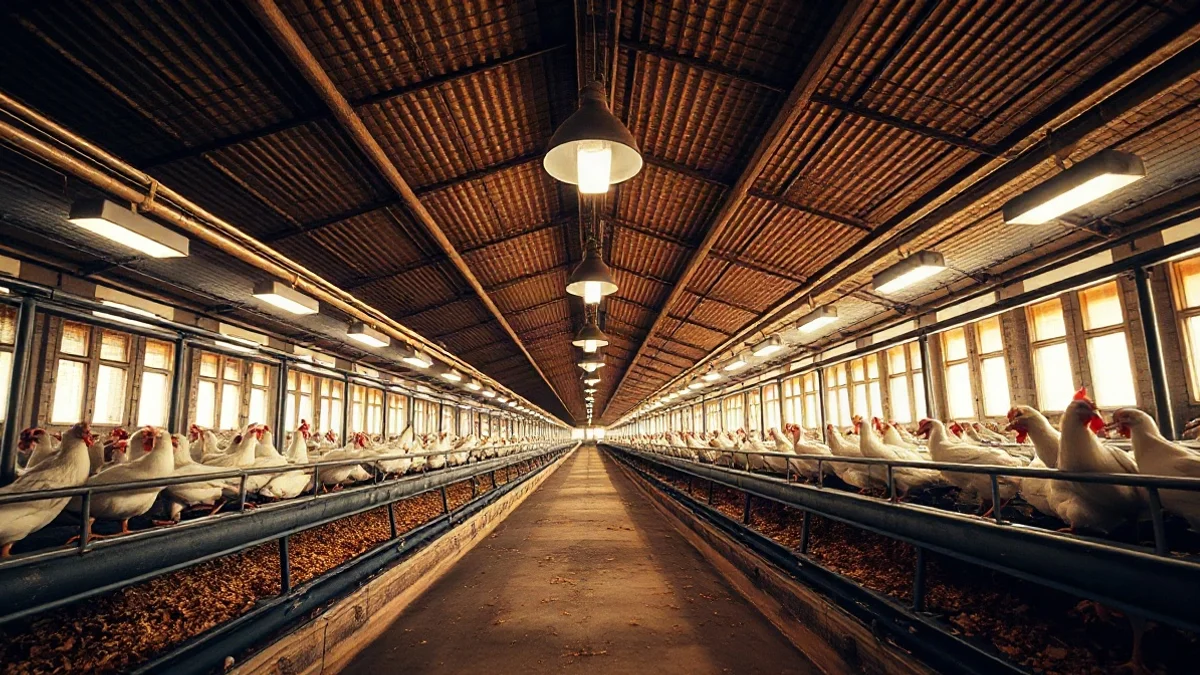
The Danish government is moving to introduce a national ban on the farming of fast-growing broiler chickens, commonly known as "turbo chickens," and aims to push for a similar measure across the European Union. The dramatic step follows an undercover investigation broadcast by Danish television network TV2, which documented a poultry farm in the Jutland peninsula where the birds' daily dark hours were cut in half. This practice violates local regulations and is designed to keep the chickens awake to stimulate continuous feeding and rapid weight gain.
Denmark's Minister for Food, Agriculture and Fisheries, Christian Rabjerg Madsen, urged the public to stop purchasing "turbo chickens" and announced the initiation of immediate work on the policy. "I want to promote a national ban on the breeding of fast-growing broiler strains, but it is clear that this needs to be examined legally and economically. At the same time, we will work to impose a parallel ban across the entire European Union," he said in an interview with the British newspaper The Guardian.
From 50 Grams to 2 Kilograms in 33 Days
Returning to the center of European public discourse is the heavy physical toll paid by poultry strains subjected to accelerated genetic modification. The most common strain in Denmark, "Ross 308," grows from a hatching weight of about 50 grams to a slaughter weight of roughly two kilograms in just 33 days. By comparison, chicken strains growing at a natural or slow pace require 46 to 63 days to reach the same weight.
According to experts and animal welfare organizations, this monstrous growth rate leads to bone collapse, severe skeletal disorders, and internal organ failure. Animal Protection Denmark described the phenomenon as "the product of an unethical and distorted farming method that leads to systematic abuse," demanding a minimum growing period of 56 days, standard in the organic sector. Concurrently, the European organization Eurogroup for Animals called on the EU to adopt the Danish initiative, noting that such fast-growing strains are inherently prone to suffering as their bodies bloat to the point where they can barely stand.
Industry Warnings Over Import Evasion
Christian Tvergaard, the owner of the farm featured in the undercover report, admitted to failures following the broadcast and announced procedural changes. "I made several wrong decisions and there is no excuse for that. I have fixed the lighting program and work procedures at the house," he stated.
Conversely, the Danish food industry has expressed concern over unilateral action. Clement Hinkeballe Rybergard, CEO of the poultry producers' organization Danpo, clarified that a local ban alone will not solve the problem. "If Denmark bans the production of turbo chickens while restaurants, chains, and consumers can continue to import such cheap poultry from abroad, no benefit to animal welfare is achieved, and demand will simply shift to other countries," he warned.
Danish authorities estimate that about 95% of poultry in the European Union is currently raised in intensive systems designed for cheap meat production. Copenhagen hopes that formulating national legislation will provide the necessary legal impetus to change standards in Brussels and prevent what proponents describe as a "race to the bottom" in the food industry.