Amar'e Stoudemire in the Hall of Fame: "For 20 years I studied Torah in secret"
The former NBA star received a huge honor and in his speech returned to the Israeli chapter of his career: "I was there for a deeper purpose. I was living the dream."
The 2026 class of the Basketball Hall of Fame was officially inducted last night into its home in Springfield, Massachusetts. Eight new members received the honor: players Candace Parker, Elena Delle Donne, and Chamique Holdsclaw, Amar'e Stoudemire, coaches Doc Rivers, Mark Few, and Mike D'Antoni, and referee Joey Crawford. However, for basketball fans in Israel, Stoudemire's speech provided a one-of-a-kind moment.
In his speech, Stoudemire reviewed an extraordinary journey that began with a difficult childhood, continued with the direct jump from high school to the NBA and the great years in Phoenix and New York, and ended far from the United States. When speaking about the decision to come to Israel, he revealed how much it was connected to the personal and spiritual journey he had been going through for years.
"For 20 years I studied in secret. I studied Torah, I studied the Tanakh and the biblical understanding of history," Stoudemire said. "I wanted to get to a place where I could both live and play. So after my last game in Miami, I took my talents overseas, to Israel."
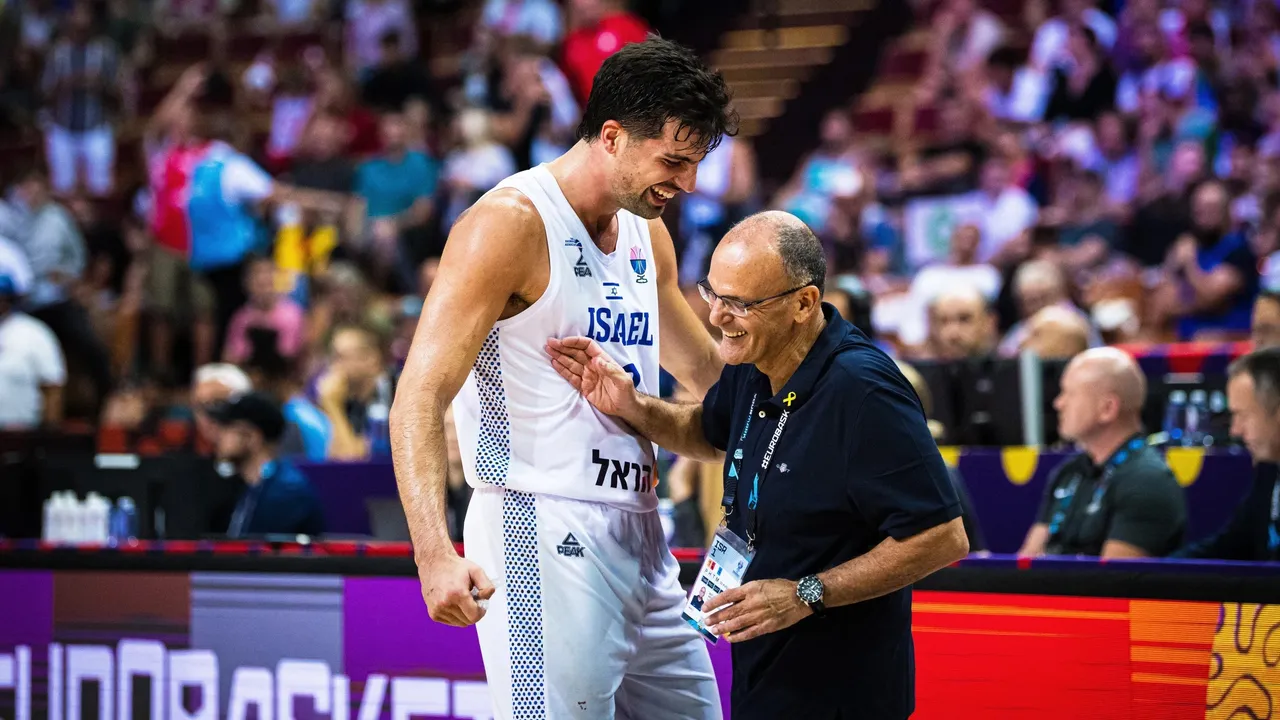
Stoudemire continued and told about the sharp change he experienced with the move to Hapoel Jerusalem. After years of being accustomed to private jets and five-star hotels in the NBA, in Israel he found himself riding buses and playing in smaller arenas. From his perspective, that was not the main thing at all: "I was there for a deeper purpose and for a certain reason. My family and I really enjoyed our time there."
In Jerusalem, he also won the first championship of his career, and later moved to Maccabi Tel Aviv, his last stop as a player. "I lived in Tel Aviv, on the Mediterranean Sea, and I was living the dream. It was great, it was beautiful. I enjoyed it very much and finished my career with a championship and Finals MVP," he recalled.
Even before reaching the Israeli part, Stoudemire returned to the beginning of the road and the childhood in which basketball became for him much more than a game. He said that the first basketball he received from his mother became his "best friend" and a kind of therapy during a period when his family moved between cities and countries. Every time he faced a difficulty, he would go to the court and play alone against an "imaginary Michael Jordan."
From there, the road led him to the ninth pick in the 2002 draft and to Phoenix, where he became one of the dominant big men in the NBA and a central part of D'Antoni's "Seven Seconds or Less" team. Stoudemire told how his coach's system changed the game and allowed the Suns to play positionless basketball even before it became common in the league.
His NBA career lasted 14 seasons and included six All-Star appearances. In his first eight seasons in Phoenix, he averaged 21.4 points and 8.3 rebounds, before moving to New York on a huge contract and becoming one of the Knicks' most prominent stars.
In his speech, he also returned to one of the most difficult points in his career, when he had to undergo microfracture knee surgery at his peak. Stoudemire told how he heard assessments around him that he would no longer return to being the same player, but he managed to recover, play all 82 games the following season, and be selected to the All-NBA team.
At the end of the speech, Stoudemire returned to the message that accompanied his entire story - perseverance. Someone who grew up in poverty, reached the pinnacle of the NBA, went through severe injuries, and finished his career in Israel with a championship, asked to pass on to the next generation the lesson he learned along the way: "Stay out of trouble. Stay positive, focused, and meaningful, and always remember that perseverance - no matter what a person goes through - can help you get through everything."