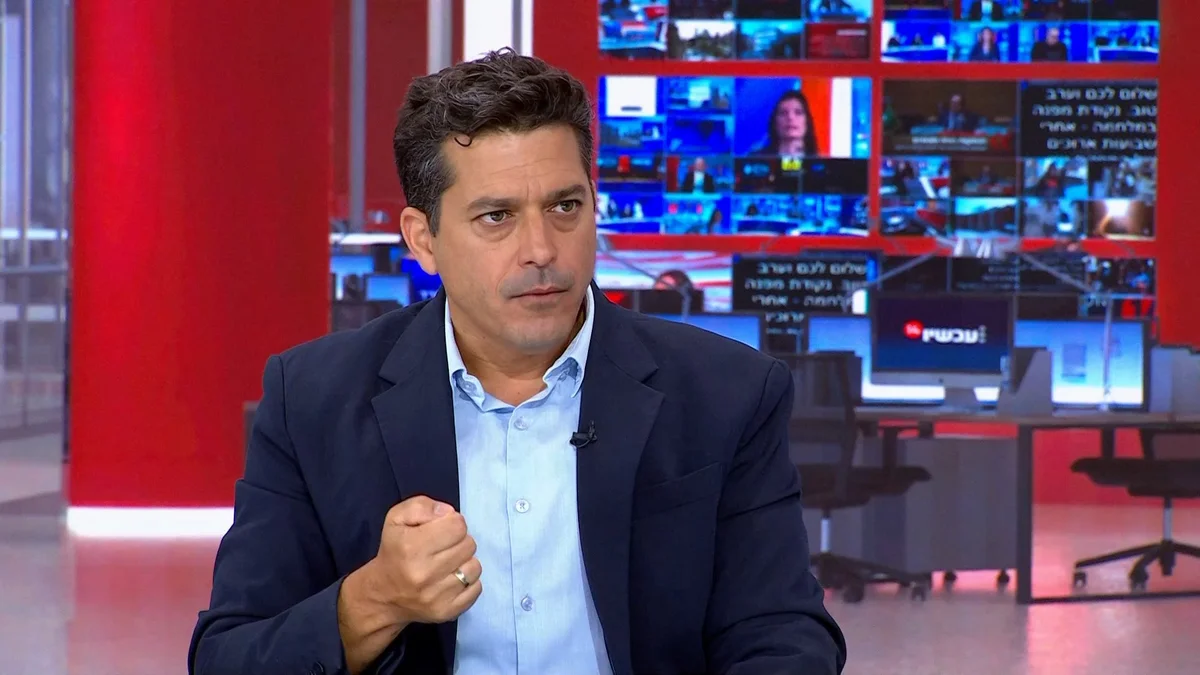
"Absurd, it shouldn't have been handled like this": Eylon Levy on the public diplomacy apparatus
Eylon Levy, who served as a spokesperson for the National Public Diplomacy Directorate, reveals how he became the country's official spokesperson due to a suit and native-level English. He said these things to the "Blue and White" podcast with Ben Carasso.

In the critical moments of October 7, the State of Israel found itself not only in a difficult military campaign but also on a complex public diplomacy front against international media. While public systems and official channels struggled to provide an immediate response to the flood of reports from around the world, there were those who found themselves on the front lines of public diplomacy almost by accident.
One of the prominent names that suddenly emerged on the studio battlefields of the BBC, CNN, and other foreign networks is Eylon Levy, who quickly became one of the most recognizable faces of Israeli public diplomacy in the first weeks of the war.
In a conversation on Ben Carasso's 'Blue and White' podcast, Levy revealed the mechanism and the unconventional behind-the-scenes of his entry into the role:
"Before the war, I had no connection to the government. But we were in an atmosphere where everyone just took a position. In the first week, I was sucked into the public diplomacy apparatus."
According to him, the criteria for receiving the dramatic role during the national emergency were both basic and surprising:
"They told me, 'Great, you speak English, you have a jacket, you have a tie - from tomorrow you are the government spokesperson, good luck.' A week into the war, I find myself in front of the cameras, being interviewed by the media as if I were the government spokesperson. Absurd, it shouldn't have been handled like this."
Levy presented the reality in which the state managed its public diplomacy efforts at peak moments with a lack of an orderly mechanism or prior training, and reliance on random civilian resourcefulness. Levy's story tells of how state systems operated in moments of crisis when all that was needed to become Israel's official spokesperson before hundreds of millions of viewers around the world was native-level English, a suit, and above all, being in the right place at the right time.